Starter pack
100 ml
Houseplants, a first application and compact balcony gardens.
Request this pack
Cold-pressed botanical protection for vegetables, herbs, fruit plants, flowers and ornamentals. Apply at the first signs of listed pest pressure to reduce fresh feeding and protect healthy new growth.
Concentrated product. Do not apply undiluted to foliage. The exact mixing rate is printed on the supplied market-specific label.

Select the volume that matches your garden and frequency of use. Final spray volume depends on the exact dilution stated on the supplied label.
Starter pack
Houseplants, a first application and compact balcony gardens.
Request this packBalcony pack
Balcony plants, terrace containers and a small collection of pots.
Request this packGarden pack
Kitchen gardens and regular seasonal plant care.
Request this packLarge garden pack
Multiple beds, fruit plants and larger home gardens.
Request this packProfessional pack
Nurseries, landscapers, community gardens and repeated use.
Request this pack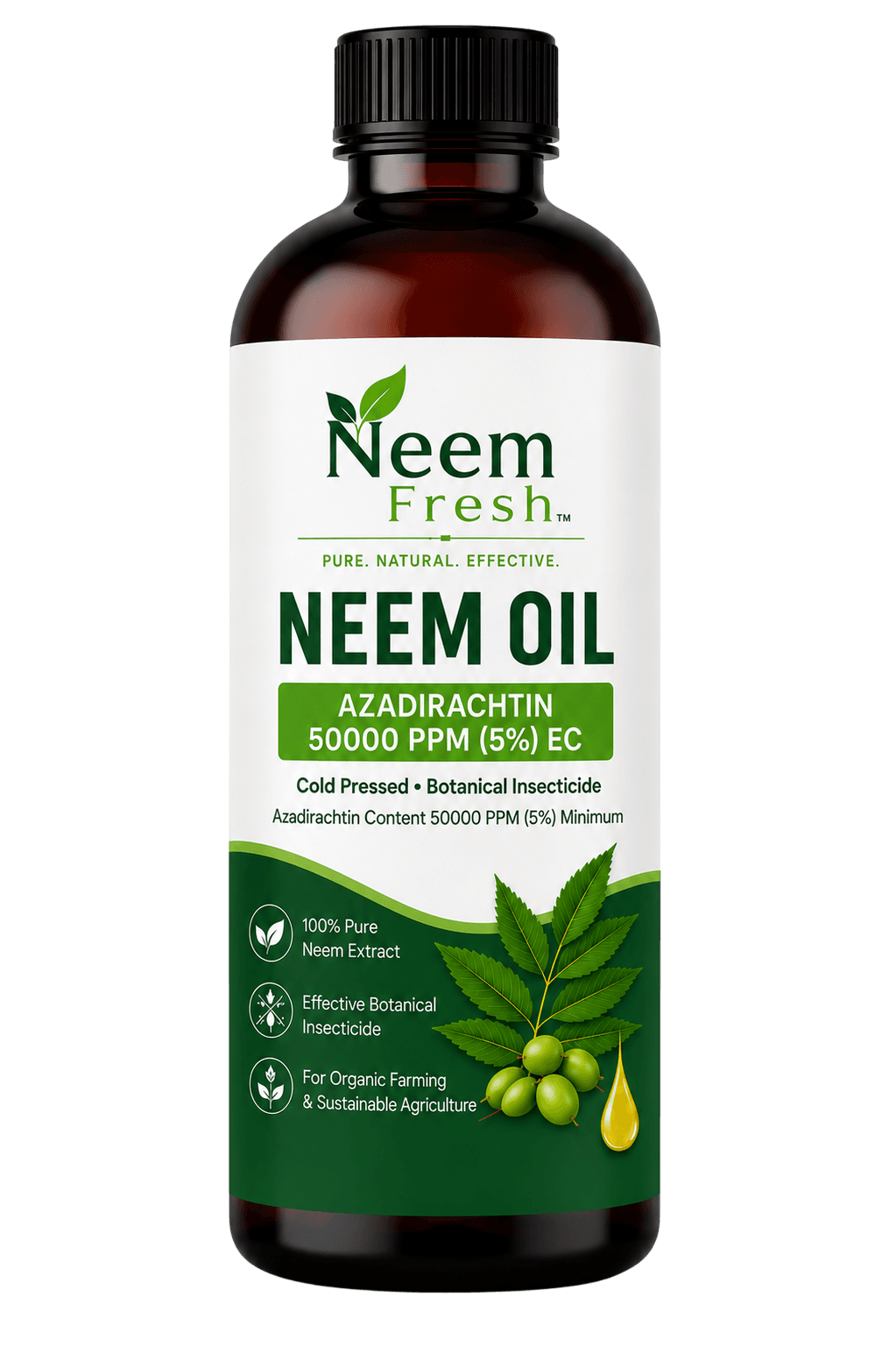
Use first
At early pest signs
Neem oil is pressed from neem seeds and contains a natural mixture of neem compounds. In a finished garden-use product, those compounds help discourage pest feeding, interfere with the development of immature insects and provide contact action where spray coverage reaches the pest.
Healthier growth comes from reducing ongoing pest pressure. When insects feed less, plants can produce cleaner new leaves with less fresh curling, stippling, honeydew and chewing damage.
Apply only to the crops and ornamentals named on the label supplied for your market.
Start early, reach the active colony and monitor fresh growth instead of applying a blanket spray on a fixed calendar.
Neem compounds help reduce continued feeding by listed sucking and chewing pests.
Azadirachtin-containing grades can interfere with growth and moulting in immature insects.
Even coverage reaches colonies on shoots, stems and the protected underside of leaves.
Lower pest pressure means less fresh curling, stippling, honeydew and chewing damage.
Common garden targets
The applicable pest list depends on the finished formulation and destination-market label. Treating early pest stages and covering their hiding places gives the best practical result.
Concentration and approved use differ by formulation and market, so the bottle label—not a universal internet recipe—sets the exact amount per litre.
Use in the cool early morning or evening on a well-watered plant. Avoid high heat, direct midday sun and active pollinator visits.
Identify the active pest and check new growth, stems, buds and both sides of the leaves.
Shake the bottle and measure the exact amount per litre stated on the supplied label.
Add the concentrate to clean water as directed. If an emulsifier is required, use only the type and amount stated on the label.
Treat a few leaves first when the plant variety has not been sprayed with this product before.
During cooler hours, wet the upper and lower leaf surfaces, young stems and visible colonies evenly without excessive runoff.
Look for less fresh damage and fewer young pests, then repeat only at the interval printed on the label.
Keep children and pets away during mixing and until foliage is dry or as the label directs.
Keep spray and wash water out of ponds, drains and surface water.
Store the sealed bottle in a cool, dry and dark place between applications.
Neem oil supports healthier plants by reducing pest feeding and fresh foliage damage. It is applied to leaves and stems; it does not replace the nutrients plants take from the soil.
Pair a separate neem cake product with compost when the garden needs organic matter, gradual nutrient support and a stronger soil programme.
Explore Neem CakeThe oil is manufactured from selected neem seeds using controlled cold pressing, filtration, in-house quality checks and protected storage. Product identity, batch information and application directions accompany the supplied garden grade.
Request product informationControlled seed-oil extraction for the intended garden grade.
In-house testing supports repeatable product quality.
Mixing and application guidance matched to the supplied product.
Sealed formats from 100 ml bottles to 25 litre supply.
No. This page describes a garden-use neem oil concentrate. Shake it and dilute it at the exact rate printed on the supplied product label before spraying plants. If the selected pack requires an emulsifier, use only the stated type and quantity.
Use it on the vegetables, herbs, fruit plants, flowers, ornamentals and houseplants named on the market-specific label. Test a small leaf area before treating an unfamiliar or sensitive variety.
Depending on the finished label, neem oil products are commonly used for pests such as aphids, whiteflies, thrips, spider mites, mealybugs, scale crawlers, leaf miners and young caterpillars. Early treatment and complete coverage give the strongest garden routine.
Start when you first see active pest pressure. Inspect the new growth after treatment and repeat at the interval stated on the label, because concentration, crop and local registration determine the correct schedule.
Aphids, whiteflies, mites and other young pests often shelter and feed under leaves. Reaching those areas gives the contact coverage a foliage treatment needs.
Neem oil is used for foliage and pest care; it does not feed the plant. For soil organic matter and gradual nutrient support, use neem cake with compost and the plant's normal soil programme.
Keep the concentrate stored away from children and animals. Keep people and pets away during mixing and spraying and until treated foliage is dry, or longer when the label directs. Apply after bees have stopped visiting flowers and avoid spraying open blooms.
Natural cold-pressed neem oil can thicken in cooler conditions. Keep the bottle sealed and gently warm it in lukewarm water, then shake it before measuring. Store it tightly closed in a cool, dry and dark place.
Tell us your garden size, plants and pest problem. We will help identify the relevant pack, product information and supply option.
Available in 100 ml, 250 ml, 500 ml, 1 litre and 25 litre packs.